📊 Implications
1. The Problem: Resonance Disaster
When two high-intensity (120% reactive) nodes connect without a dampening system, they create Positive Feedback Loops. In physics, this is a resonance disaster. In relationships, it's a detonation.
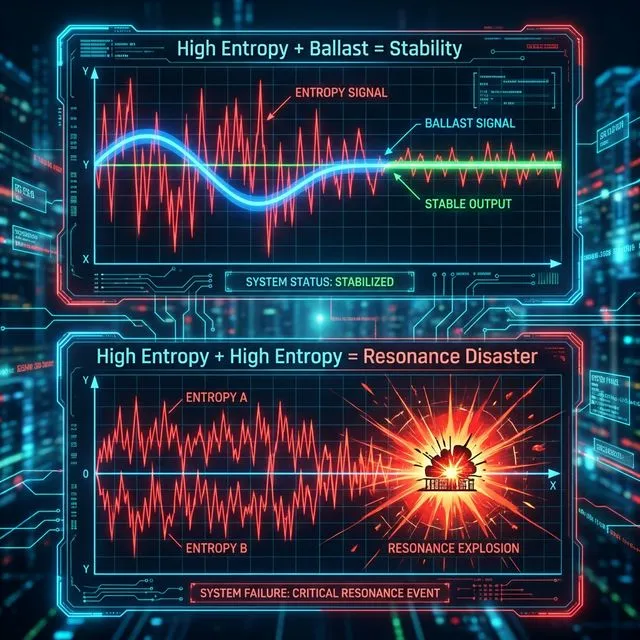
2. Node Archetype: The Ballast
To survive high-acceleration career paths, the operator needs Stability Nodes (Ballast), not Mirror Nodes (Intensity Match).
🛠️ Component: Ballast Identification
- Low Reactivity: Descriptive non-judgmental problem framing.
- Fixed Point: Identity remains stable regardless of external market status.
- Noise Filter: Does not respond to "Drama Prompts."
- High Capacity: Can match intellectual depth without Matching 1:1 emotional spikes.
3. Optimization: The Screening Protocol
Run BALST-SCREEN on new network nodes:
2. Are they comfortable in "Dead Air" (Silent companionship)?
3. Do they make you feel amped or aminated (aligned energy) vs calm?
4. Can they perform "Critical Recovery" (logical advice) during your L1-crash?
4. Maintenance Rule
The Ballast is a critical system component. Do not treat them as an appliance. Every vent/dump must be preceded by a "Permission to Write" handshake. Protect the counterweight to ensure your own stability.
Frequently Asked Questions
What is a Ballast in the context of relationships?
A Ballast is a person in your network who provides stability through low reactivity, consistent identity, and the ability to offer logical recovery during your emotional crashes. Unlike a "Mirror Node" who matches your intensity (creating dangerous feedback loops), a Ballast dampens oscillations and keeps you grounded during high-acceleration periods.
How do I identify a Ballast in my social network?
Run the BALST-SCREEN: (1) Do they frame problems as logistics or destiny? (2) Are they comfortable in dead air (silent companionship)? (3) Do they make you feel calm rather than amped? (4) Can they provide logical advice during your emotional crashes? If yes to most, you've found a Ballast.
Why is surrounding yourself with high-intensity people dangerous?
Two high-intensity nodes without dampening create positive feedback loops — what physics calls a resonance disaster. In relationships, this means emotional spikes amplify instead of settling. You need counterweight dynamics (Ballast) to survive sustained high-G acceleration in your career and life.